
Capital works deductions are tax deductions available for the construction costs of structural elements in an income-producing property under Division 43 of the Income Tax Assessment Act. These deductions can apply to items such as walls, roofing, built-in cupboards, driveways and structural improvements.
Capital Works Deductions for Investment Properties Explained
Last updated:
22 May 2026
Originally published:
Jul 2020
Quick summary
- Capital works deductions are tax deductions available for the structural elements of an investment property under Division 43 of the Income Tax Assessment Act.
- These deductions can apply to residential and commercial properties, including walls, roofing, built-in cupboards, driveways, wiring and structural improvements.
- Capital works deduction rates are generally 2.5% or 4%, depending on the construction date, property type and building use.
- Eligible build-to-rent developments may qualify for a 4% capital works deduction rate, subject to specific conditions.
- Older properties may still qualify for capital works deductions if renovations or structural improvements have been completed.
- A tax depreciation schedule prepared by a qualified Quantity Surveyor can help identify eligible Division 40 and Division 43 deductions.
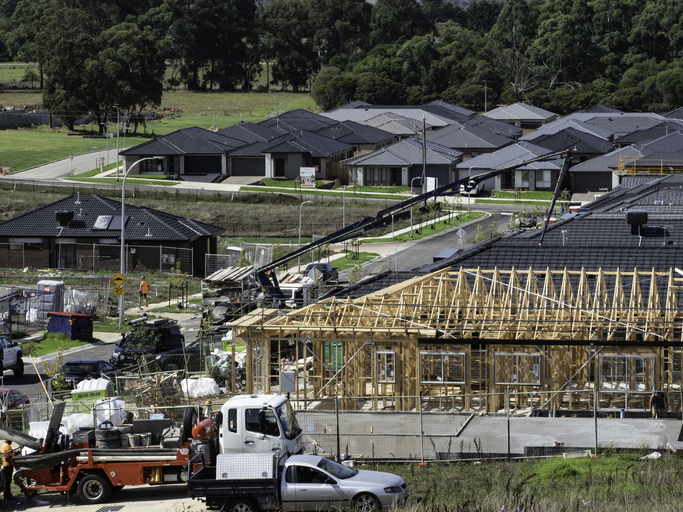
Understanding tax depreciation terminology can sometimes be confusing. For investment property owners, having a clear understanding of the depreciation deductions you may be entitled to claim can help ensure you maximise your investment property tax deductions.
As outlined by the Australian Taxation Office (ATO), there are two categories that make up depreciation deductions: Division 43 capital works deductions and Division 40 plant and equipment depreciation.
Capital works deductions apply to structural elements of a property
Capital works deductions are income tax deductions that property investors may claim for the wear and tear that occurs to the structure of a property and items considered to be permanently fixed to the property. This can also include structural improvements made during renovations, provided they fall within the relevant qualifying dates.
Capital works deductions are commonly referred to as building write-off deductions and generally apply to structural elements of a property rather than removable assets.
Residential property capital works deductions include permanently fixed assets
In a residential investment property, capital works deductions can apply to the following items:
- Bricks, mortar, walls, flooring and wiring
- Built-in kitchen cupboards
- Clothes lines
- Doors and door furniture (handles, locks etc.)
- Driveways
- Fences and retaining walls
- Sinks, basins, baths and toilet bowls
These structural components are generally claimed under Division 43 capital works rules rather than plant and equipment depreciation rules.
Commercial property capital works deductions can apply to structural improvements
Some common items in commercial properties that may qualify as capital works deductions include:
- Bricks, mortar, walls, flooring, roofing and wiring
- Sinks, tiles, basins and toilet bowls
- Mezzanines
- Ducting for air conditioning
Commercial property owners may also be eligible to claim additional depreciation deductions depending on the type of fit-out and the construction date of the building.
Division 40 and Division 43 depreciation apply to different asset types
Particular assets can sometimes cause confusion because some components qualify for plant and equipment depreciation, while other components qualify for capital works deductions.
An example of this is an air conditioning system. The air conditioning unit itself generally depreciates under Division 40 as plant and equipment, while the ducting connected to the same unit generally falls under Division 43 capital works deductions.
Understanding the distinction between Division 40 and Division 43 depreciation is important to ensure investment property depreciation deductions are calculated correctly.
Residential buildings constructed after specific dates may qualify for capital works deductions
As a general rule, residential buildings where construction commenced after 15 September 1987 may entitle the owner to claim capital works deductions at a rate of 2.5% per year for up to 40 years.
For residential buildings where construction commenced from 18 July 1985 to 15 September 1987, the applicable deduction rate is generally 4%.
Capital works deduction rates are generally 2.5% or 4%, depending on the construction date, property type and how the building is used.
Short-term accommodation properties may also qualify for capital works deductions
For certain buildings used for short-term accommodation, capital works deductions may be available where construction commenced after 21 August 1979.
This can include:
- Apartment buildings in which you own at least 10 apartments, units or flats
- Hotels
- Motels
- Guest houses with at least 10 bedrooms
The applicable capital works deduction rate will generally depend on the construction date and may be either 2.5% or 4%.
Commercial buildings constructed after 19 July 1982 may qualify for capital works deductions
In commercial buildings, capital works deductions generally apply where construction commenced after 19 July 1982.
The deduction rate will generally depend on the construction date and may be either:
- 2.5% per year
- 4% per year
Commercial property depreciation rules can vary depending on the building type, construction period and subsequent renovations or improvements made to the property.
Eligible build-to-rent developments may qualify for different capital works deduction rates
Under changes announced in the 2026 Federal Budget, eligible build-to-rent developments may qualify for a 4% capital works deduction rate, subject to specific conditions.
Eligibility requirements can include factors such as:
- Construction commencing after 9 May 2023
- A minimum number of dwellings within the development
- Minimum lease term requirements
Property investors should seek professional advice to determine whether a development qualifies under the build-to-rent rules.
Older properties may still qualify for capital works deductions after renovations
If your investment property was constructed before these qualifying dates, it is still worth speaking with a qualified Quantity Surveyor, such as BMT Tax Depreciation.
In many cases, older properties may have undergone renovations or structural improvements that could still result in capital works deductions for the current owner.
H&R Block Tax Experts can help maximise investment property deductions
Owning an investment property can involve complex tax rules, particularly when it comes to claiming depreciation deductions correctly under Division 40 and Division 43.
H&R Block Tax Experts can help investors understand which property expenses may be deductible, how capital works deductions apply and whether a tax depreciation schedule may help maximise available deductions.
We can also work with qualified Quantity Surveyors, such as BMT Tax Depreciation, to help ensure eligible depreciation deductions are correctly identified when preparing your tax return.
A tax depreciation schedule can help maximise investment property deductions
A tax depreciation schedule prepared by a qualified Quantity Surveyor can help ensure you are maximising the depreciation deductions available for your investment property.
A BMT Tax Depreciation Tax Depreciation Schedule can help identify eligible Division 40 and Division 43 deductions that may otherwise be overlooked.
If you would like help understanding capital works deductions, property depreciation or investment property tax deductions, speak with your local H&R Block Tax Expert today. We can help you understand which deductions may apply to your investment property and assist with preparing your tax return correctly.
If you would like to know more about depreciation, contact the expert team at BMT Tax Depreciation on 1300 728 726.
Frequently asked questions about capital works deductions
Division 40 depreciation generally applies to plant and equipment assets that are not permanently fixed to a property, such as appliances and air conditioning units. Division 43 capital works deductions generally apply to structural building elements and permanently fixed assets, such as walls, flooring, roofing and ducting.
Yes. Older investment properties may still qualify for capital works deductions if renovations, extensions or structural improvements were completed after the relevant qualifying construction dates.
Capital works deduction rates are generally 2.5% or 4% per year, depending on factors such as the construction commencement date, building type and how the property is used.
A tax depreciation schedule prepared by a qualified Quantity Surveyor can help identify eligible Division 40 and Division 43 deductions for your investment property. This may help ensure depreciation deductions are calculated correctly when preparing your tax return.

Need help with investment property deductions?
H&R Block Tax Experts can help you understand capital works deductions and property depreciation for your investment property.
Share with your friends
Related Articles

Did you know that depreciation stands as the second most significant tax deduction for property i...
3 min read

Property depreciation is a valuable tax deduction which allows investors to make an annual claim ...
4 min read

Before making a decision to dive in and purchase any investment property, investors should seek a...
4 min read

Unlocking hidden depreciation deductions: a guide for property managers to maximise tax deductions f
In this article, BMT Tax Depreciation explores five easily missed depreciation deductions, highli...
4 min read
.png?width=55&height=48&ext=.png)
